Home · Procedures · Blepharoplasty
Eyelid surgery · rejuvenation of the gaze · Bogotá
Blepharoplasty and Periocular Rejuvenation
Rejuvenating the gaze does not mean changing its expression.
Otolaryngologist · Facial plastic surgeon · More than three decades devoted to the face
The changes around the eyes can involve skin, bags, the position of the tissues, the brow and the relationship between the eyelid and the cheek. That is why a periocular evaluation does not begin with the amount of visible skin, but with the diagnosis of the entire region.
The gaze as a region
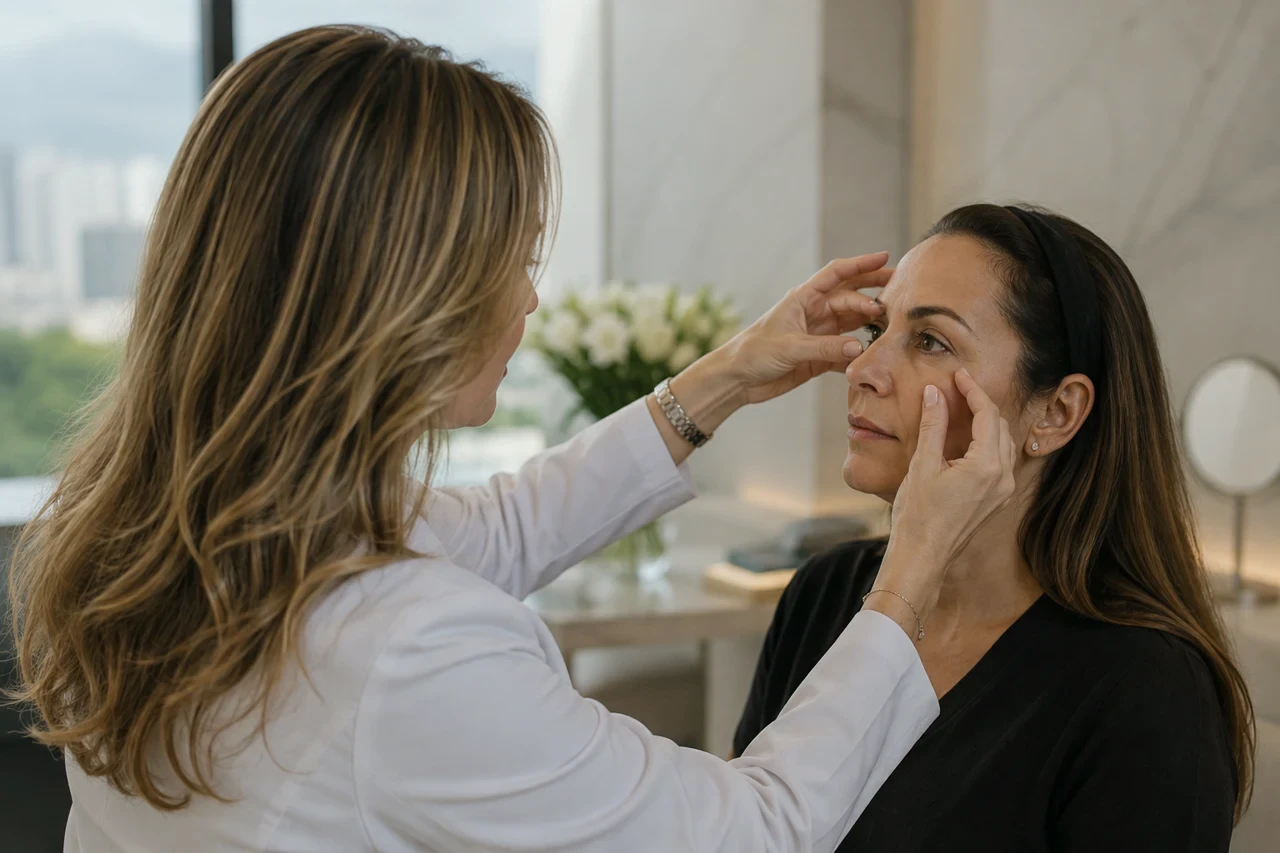
The eye area ages as a unit, not only at the eyelid.
Over time, the skin of the upper eyelid can descend, the lower eyelid can show bags and under-eye hollows, and the brow can drop. But none of these elements acts in isolation: the gaze is the result of the relationship between brow, eyelid and cheek. Identifying which of these components explains the change makes it possible to treat the real source, rather than an area that does not need correction.
Periocular diagnosis
First the region; then the eyelid.
The evaluation studies the entire periocular unit to determine what should be treated and what should be preserved.
- Skin and tissues of the upper eyelid.
- Bags, under-eye hollows and changes of the lower eyelid.
- Position of the brow and its influence on the eyelid.
- Relationship between the lower eyelid and the cheek.
According to each case
Upper, lower or combined.
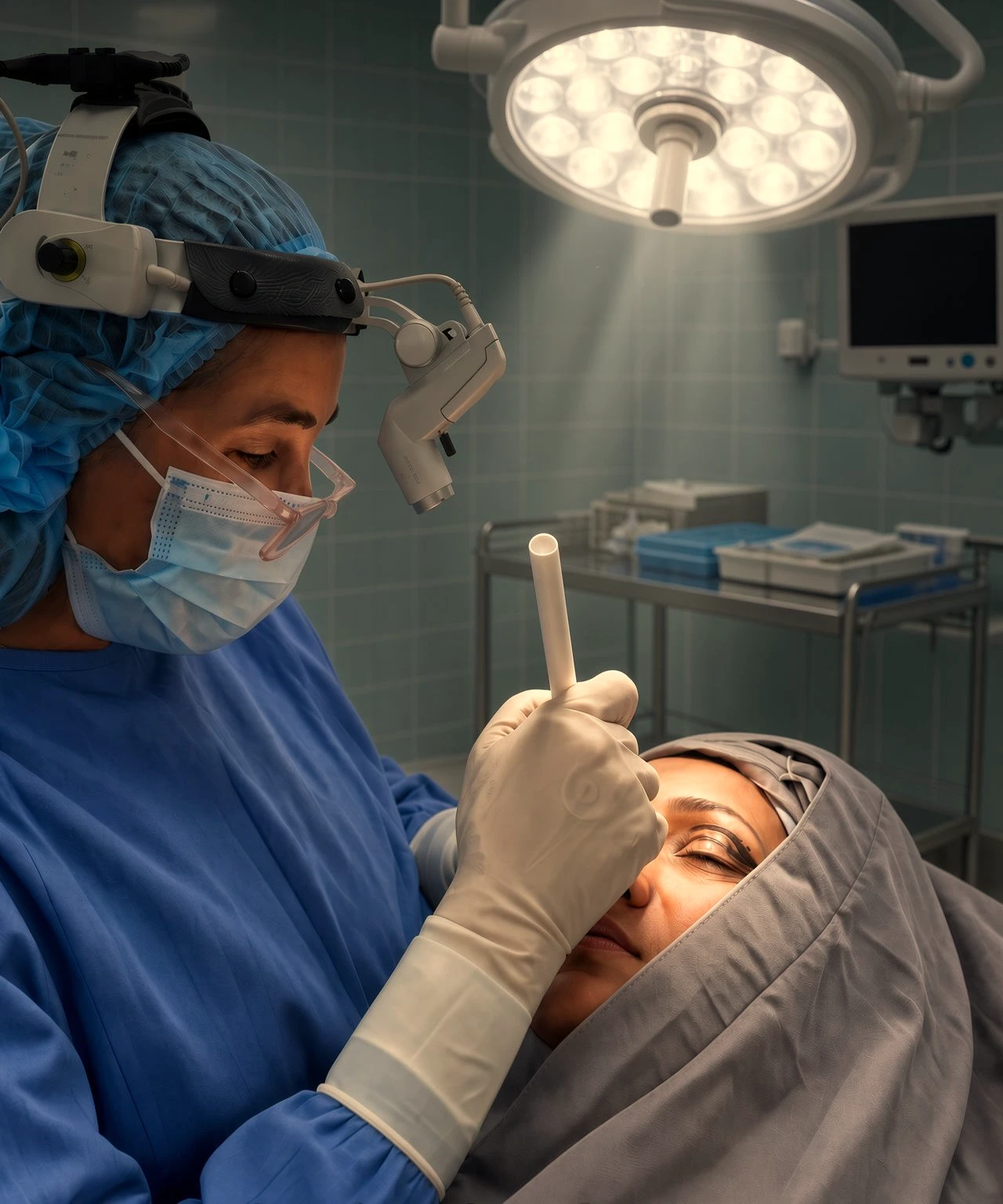
Blepharoplasty —or eyelid surgery— can be performed on the upper eyelid, the lower eyelid or both. In the upper eyelid, excess skin is not always an aesthetic matter: when it begins to reduce the visual field, the indication can also be functional.
When it is not only the eyelid
At times, the best solution is not a blepharoplasty.
When what ages the gaze is the position of the brow or the descent of the mid-face, operating only on the eyelid may not resolve the problem —or may even accentuate it. In those cases, the strategy may include other approaches or be combined with facial rejuvenation. Recognizing this in time is part of the diagnosis.
Correcting the eyelid without reading the region can change the gaze, not rejuvenate it.
Expression and identity
A more rested appearance, without changing expression.
The purpose is not to modify the shape of the eyes or to erase the features that make a gaze recognizable, but to recover a more rested and harmonious appearance. A natural result depends on planning that respects expression.
Recovery
Care throughout the process.
Recovery varies with the type of blepharoplasty and with each patient. The timelines, the care and the follow-up visits are explained individually before surgery, and the course is accompanied throughout the entire process.
Risks
Explained, not minimized.
Every periocular procedure carries risks, limitations and possible complications. Specific information on risks, benefits, alternatives and expectations is part of the evaluation and the informed-consent process.
Clinical cases
Every face has its own story.
A selection of clinical cases and their outcomes.
Clinical criterion
The eye area, within the whole face.
In Aesthetic Integrity™, the eyes are not treated as an isolated zone but as part of the expression of the face. Structural diagnosis, proportion, preservation of identity and restraint guide what to correct and what to preserve, supported by decision frameworks such as the Facial Integrity Scale™ (FIS™).
Frequently asked questions
About blepharoplasty.
What are upper and lower blepharoplasty?
Does blepharoplasty change the expression of the gaze?
Are under-eye bags always operated on?
When is the problem not only the eyelid?
The decision begins with the diagnosis.
Tell us what you would like to understand or improve about your gaze. In consultation we assess the entire periocular region and determine the most appropriate next step for your case.
Centro Médico Almirante Colón · Carrera 16 No. 84A-09, Office 723 · Bogotá D.C. · Care in Spanish, English and French.
Medically reviewed by Alexandra Mora Hernández, MD · Last reviewed: 21 September 2026. Educational content; it does not replace an individual medical assessment.